How to Insure a Salvage or Rebuilt-Title Car (and Save 25–40%)
Most insurers refuse salvage titles outright. The ones that don't typically demand a pre-coverage inspection and limit you to liability-only. Here's the full carrier list, the inspection process, the stated-value play that saves 25–40%, and when liability-only is the smarter call.

Quick answers
- How often should I shop my auto insurance?
- Every 12 months at minimum. Insurance rates are repriced annually based on your driving record, credit changes, ZIP code shifts, and each carrier's own loss-ratio adjustments — so the cheapest carrier for your profile changes year-to-year. Industry data from Insurify and J.D. Power shows that drivers who re-shop annually save an average of $487/year compared with drivers who auto-renew the same carrier for 5+ years.
- Does requesting an insurance quote hurt my credit score?
- No. Auto insurance quotes use a soft credit pull — sometimes called a credit-based insurance score lookup — which never appears on your credit report and never affects your FICO or VantageScore. This is different from auto-loan applications, which use hard pulls. You can compare 5-10 insurance quotes in an afternoon without any credit-score impact.
- What's the difference between full coverage and liability-only?
- Liability-only covers damage you cause to other people and their property — it's the state-mandated minimum in most states. Full coverage bundles liability with collision (covers your car when you're at fault) and comprehensive (covers theft, weather, vandalism). If your car is worth less than ~$3,000 OR you've fully paid off the loan, liability-only often makes financial sense; otherwise full coverage usually does.
The short answer
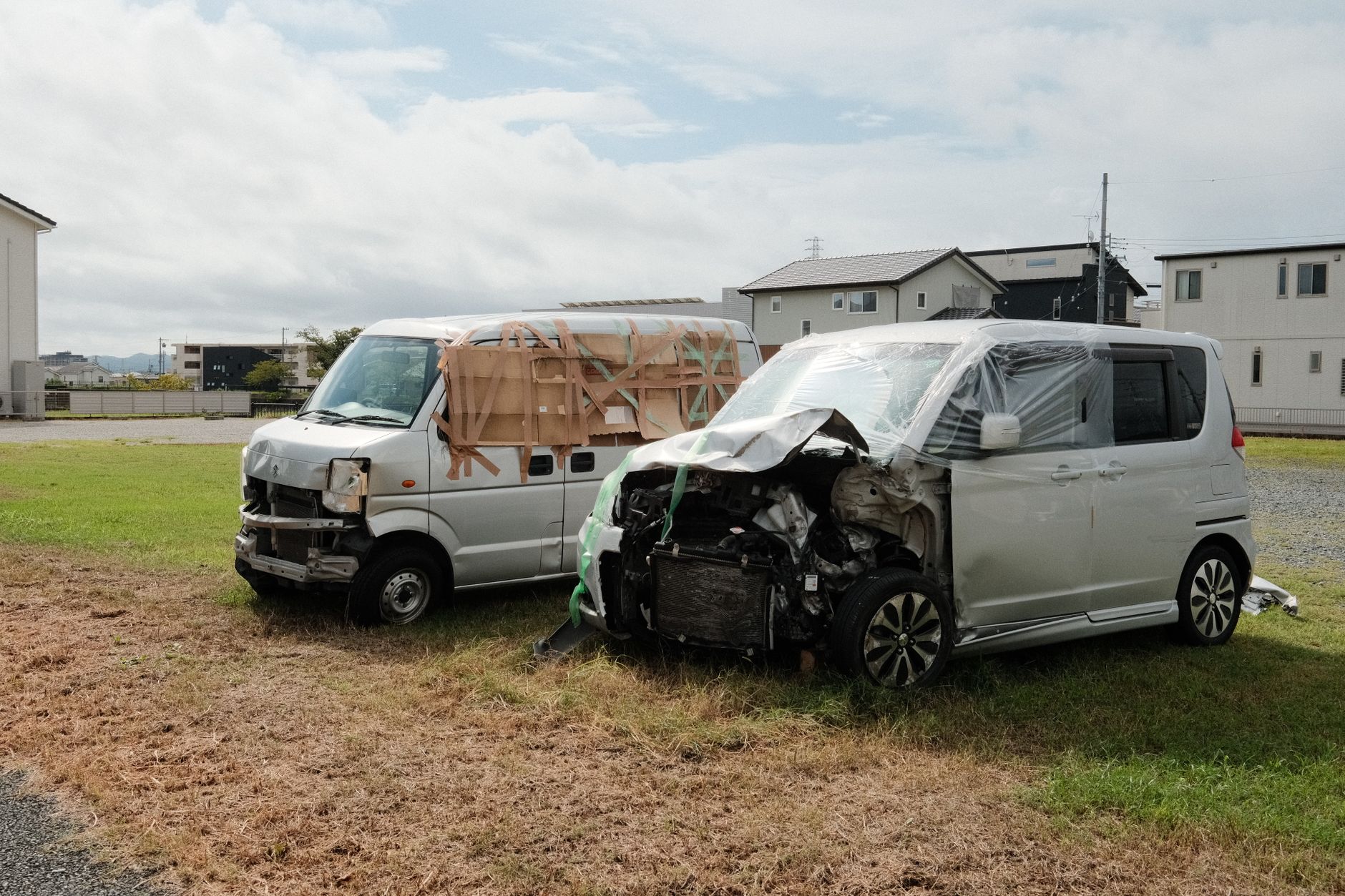
A salvage title means an insurer once declared the car a total loss (typically after a collision, flood, or theft recovery where repairs exceeded 70–90% of the car's pre-damage value). A rebuilt title means the car has been repaired post-salvage and re-inspected by the state, and is now legally drivable.
Both are perfectly legal to register and drive in 49 U.S. states. But the insurance market treats them like radioactive waste: roughly 60% of major carriers refuse them outright, and the ones that quote often limit coverage to liability-only or surcharge comp/collision aggressively.
The workaround:
- Quote 4+ insurers known to write rebuilt-title coverage (Progressive, State Farm, Geico, The General, Dairyland)
- Do the required pre-coverage inspection properly — 8–12 photos via app or third-party
- Use stated value, not ACV, with an independent appraisal to lock in lower premiums
- Seriously consider liability-only if the car is worth under $5,000
Done right, you'll insure a rebuilt-title car for 25–40% less than the same coverage on an equivalent clean-title vehicle — because the car's value is lower and you've forced the insurer to underwrite from a real number.
Why insurers fear salvage titles
Three structural concerns drive the underwriting reluctance:
1. Actual cash value (ACV) is hard to model. Standard valuation tools (KBB, NADA, Black Book) list rebuilt-title vehicles at 20–40% below clean-title equivalents — but the variance is wide and condition-dependent. Insurers can't easily price the risk without manual inspection.
2. Repair-quality uncertainty. A rebuilt title means the state inspected the car post-repair, but state inspections vary wildly in rigor. A car rebuilt in Massachusetts (strict inspection) is different from one rebuilt in Mississippi (lenient). Insurers can't tell which from paperwork alone.
3. Fraud and prior-damage concealment. Some salvage vehicles are rebuilt with structural compromises that aren't immediately visible. Underwriters worry about claims for "new damage" that's actually pre-existing.
Most insurers solve this problem by refusing the business entirely. The carriers that DO write rebuilt-title coverage have specialized underwriting processes.
Who actually writes full coverage on salvage / rebuilt titles
These carriers will quote (not just refuse) in most states:
1. Progressive — most lenient nationally. Quotes salvage and rebuilt titles in 47+ states, usually with a pre-coverage photo inspection (via Progressive app). Best starting point for most drivers.
2. State Farm — varies wildly by agent. Full coverage available in 35+ states. Local agent relationships matter more here than with other carriers. Call multiple State Farm agents in your area to find one willing to quote.
3. Geico — liability-only in many states; full coverage in 20+ with a pre-coverage inspection. Cheapest pure-liability option for rebuilt titles.
4. The General — non-standard specialist. Quotes most rebuilt titles. Often cheapest for full coverage, but the premium is still higher than Progressive/Geico baseline.
5. Dairyland (owned by Sentry) — quotes both liability and limited collision/comp on rebuilt titles. Strong in Midwest and South.
6. Bristol West (Farmers subsidiary) — non-standard market, rebuilt-title-friendly in 40+ states.
7. Hagerty / Grundy / American Modern — classic-vehicle specialists. If your rebuilt-title car is collectible or specialty (older muscle car, project vehicle), these underwrite rebuilt titles routinely on agreed-value basis.
The strategy: get at least one specialty insurer (The General or Dairyland) to quote first. Then use that quote as leverage with Progressive or State Farm — they'll often re-rate downward to win the business.
The pre-coverage inspection (free or $35–$75, takes 30 minutes)
Most insurers writing rebuilt-title coverage require a current photo inspection before binding. The typical inspection requirements:
Photos required (8–12 total):
- Front exterior (full vehicle visible)
- Rear exterior (full vehicle visible)
- Driver-side profile
- Passenger-side profile
- Interior (front seats + dashboard)
- Interior (rear seats)
- Dashboard with engine running (showing no warning lights)
- Odometer reading (current mileage)
- VIN plate (driver-side dash, visible through windshield)
- Doorjamb VIN sticker (driver's door)
- Engine bay
- Any prior damage area (post-repair condition)
Delivery methods:
- Carrier app (Progressive, Geico, State Farm): self-submitted via phone. Free.
- Third-party inspection service ($35–$75): some insurers require an independent verifier (CARCO, Inspect Now, or local service). The insurer schedules.
- Mail-in photo package (legacy method, some smaller carriers): print + mail to underwriting.
Critical: insist on doing this inspection BEFORE binding coverage. If the inspection reveals undisclosed damage (prior frame damage, mismatched VIN stickers, hidden flood damage), you want to know NOW — not at claim time when the insurer can use undisclosed damage as grounds for claim denial.
How to get the 25–40% lower premium (stated value play)
Updated Oct 13, 2026
Top insurance carriers for auto insurance shoppers
Comparing 11 audited carriers· Premiums verified Oct 13
Data last reviewed . Source: CarSavr editorial methodology.
Editor's pick · 2-min compare
The Zebra
Compare 100+ Insurers in one place

Compare 100+ insurers
Best multi-quote tool

AI-driven personalized quotes
| Carrier |
|---|
Premium data: 2024 national-average annual premiums published by Quadrant Information Services from state-DOI rate filings. Sample driver: 35-year-old · clean driving record · $100/$300/$100 full coverage · $1,000 deductible · median ZIP code. Your actual quote will vary based on age, ZIP, driving record, vehicle, credit, and coverage selections. CarSavr may earn a commission when you buy a policy through our links — it never affects how we rank carriers.
Provider logos and trademarks belong to their respective owners and are used for identification purposes only. Providers shown for comparison and educational purposes — display does not imply partnership unless an active affiliate relationship is stated separately.
How rows are ranked: Editor's pick first, then by overall rating. Promoted placements are flagged with a Sponsored badge. Read the full methodology →
A salvage-title car typically has an ACV 20–40% below an equivalent clean-title car. That means lower replacement cost = lower comp/collision premiums — IF you can get the insurer to use the right value.
The 3-step stated-value process:
Step 1: Get an independent appraisal ($75–$125). Hire an ASA-certified or IAEI-certified appraiser to issue a written valuation. The appraisal should specifically reference "rebuilt-title vehicle" and provide a stated value based on current market comparables.
Step 2: Request stated-value coverage, not ACV. When binding the policy, specifically ask: "I want stated-value coverage at $X, supported by an independent appraisal." Stated value caps the insurer's payout at a number you agree to upfront — usually the appraised value.
Step 3: Verify the policy declarations page explicitly lists:
- "Rebuilt title" notation
- "Stated value: $X" on the comp/collision line
- The appraisal document referenced as an exhibit
This single sequence regularly cuts comp/collision premiums by 25–40% vs. quoting on assumed clean-title value or vague "Actual Cash Value" terms. It also protects you at claim time — the insurer can't unilaterally lowball your payout when the stated value is locked in writing.
When liability-only is the smarter call
For rebuilt-title cars worth under $5,000, liability-only is almost always the better economic choice.
The math:
- Full coverage on a $5,000 rebuilt-title car often runs $90–$120/month (~$1,200/year)
- Liability-only on the same car: $35–$55/month (~$540/year)
- Annual savings: $660–$720
The car's total value is roughly $5,000. The $660/year you save on full coverage = 13% of the car's value annually.
The decision rule (10× rule):
- If full coverage costs more than 10% of the car's value annually: drop comp/collision, keep liability only.
- If full coverage costs less than 10% of the car's value annually: keep full coverage.
For most rebuilt-title vehicles under $5,000, the math overwhelmingly favors liability-only PLUS putting the saved premium into a personal "vehicle replacement" savings account. After 12 months, your $660 in savings is essentially a self-insurance pool for the car.
State-specific notes
Massachusetts, Maryland: stricter rebuilt-title insurance markets. Fewer carriers will write full coverage. Get quotes from Progressive AND a local independent agent quoting MetLife/Hanover/Plymouth Rock.
California, Texas, Florida: friendlier rebuilt-title markets. Most major carriers will quote.
CarSavr quote tool
Your auto-insurance estimate
Get a real number based on your state + age.
Estimate based on industry averages. Real rates depend on driving record, credit, and vehicle. Free to compare.
New York: requires re-inspection by state DMV before insurance binds. Allow 2–4 weeks for the process.
Oklahoma: the only state that doesn't issue a rebuilt-title classification — salvage titles are "salvage" forever even after repair. Insurance treatment is harshest here; expect 30–50% surcharge or liability-only options.
What to NEVER do
- Never insure a salvage-title car as if it were clean-title. When the claim comes, the insurer will rescind coverage for material misrepresentation. You'll pay back any prior payouts AND get a CLUE database flag.
- Never accept a "we can't write that" without trying another agent. Especially with State Farm and Allstate — agent discretion varies wildly.
- Never skip the independent appraisal. Without it, the insurer uses their internal valuation, which is almost always lower than market.
- Never accept ACV-only coverage on a rebuilt title. Always push for stated value.
Bottom line
Salvage and rebuilt titles are insurable but require specialist carriers and a disciplined approach. Get 4+ quotes from Progressive, State Farm, Geico, The General, and Dairyland. Complete the pre-coverage inspection thoroughly — and BEFORE binding. Push for stated value with an independent appraisal to cut comp/collision premiums by 25–40%. Seriously consider liability-only if the car is worth under $5,000. Never misrepresent the title to a clean-title-only insurer — that's the one mistake that turns a manageable insurance challenge into a catastrophic financial event.
Related on CarSavr
- auto insurance comparison — the editor-curated hub page
- auto insurance cost estimator — free calculator
- Car Totaled With a Loan? What Happens to Your Balance, Payout & GAP
Terms in this article
1 financial term defined
Browse the full glossarySources & methodology
Fact-checked by Abigail MurrayThis guide cites the sources above. Our recommendations follow a documented, conflict-checked review process — how we review auto insurance and our editorial standards.
"How to Insure a Salvage or Rebuilt-Title Car (and Save 25–40%)." CarSavr, May 30, 2026, https://carsavr.com/guides/salvage-rebuilt-title-insurance.See if you're overpaying
Compare auto insurance offers in about 2 minutes.
Free · 2 min · No hard credit pull · No spam
Helpful?
Was this guide useful?
Keep reading

7 Proven Ways To Cut Your Auto Insurance Bill in 2026

Auto Insurance Rates by Credit Tier (2026 Full Breakdown)

Teen Driver Auto Insurance: True Cost + How to Cut It (2026)

Bundling Auto + Home Insurance: How Much Do You Actually Save?

Auto Insurance with Bad Credit: How to Find Affordable Coverage in 2026
Accident Forgiveness Explained: Is It Worth Paying Extra?
The CarSavr brief
Cut your car costs.
Smarter car advice, sent when it counts. Free, no spam, unsubscribe anytime.