Hurricane or Flood Totaled Your Car? Insurance Payout, Title Branding & Next Steps (2026)
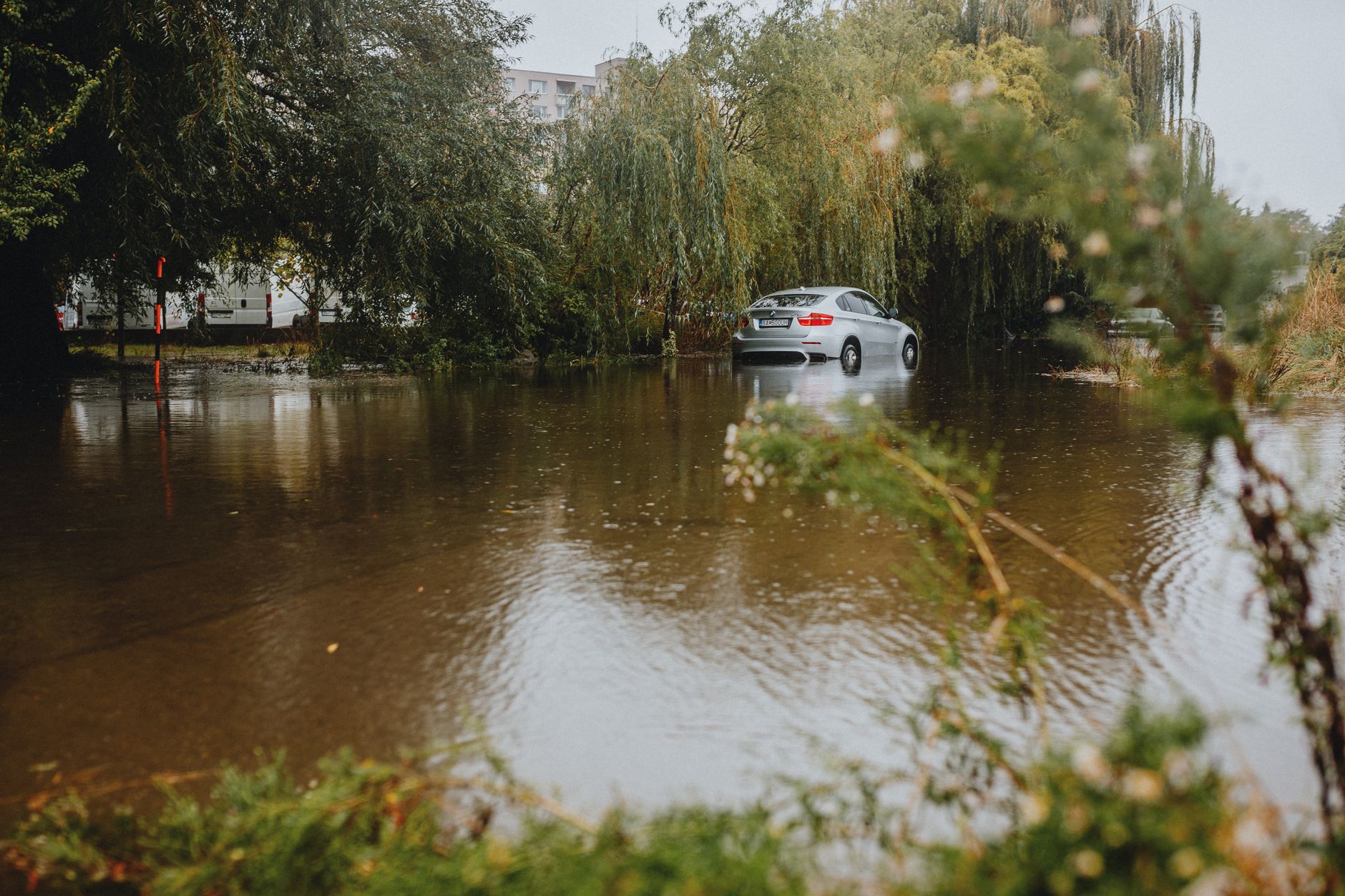
If a hurricane or flood totals your car, comprehensive insurance pays actual cash value minus your deductible, and the vehicle receives a flood or salvage title brand—permanently reducing resale value.
Quick answers
- Does liability-only insurance cover flood damage to my car?
- No. Liability insurance pays for damage you cause to other people's property, not your own vehicle. You need comprehensive coverage to receive payment for flood or hurricane damage.
- Can I keep my flood-totaled car and the insurance payout?
- Yes, by accepting an "owner-retained salvage" settlement. Your insurer reduces the payout by 2,000–4,000 dollars and you keep the wreck, but you cannot register or insure the car until it passes a state salvage inspection and receives a rebuilt title.
- How long do I have to buy a replacement car after my flood payout?
- No legal deadline exists. Most drivers buy within 30 days to avoid rental costs and transportation gaps. Your insurance check does not expire, but holding cash instead of buying immediately exposes you to price increases if regional inventory drops after a major storm.
The short answer
When a hurricane or flood totals your car, your comprehensive insurance pays the vehicle's actual cash value minus your deductible—typically within 7–14 days of the adjuster's inspection. The state motor-vehicle department then brands the title as "flood" or "salvage," which reduces resale value by 20–40 percent and blocks standard financing. You can use the payout as a down payment on a replacement or pay off your existing loan if you owe less than the settlement.
How insurers determine a flood total loss
Your insurer declares a total loss when repair costs exceed 70–80 percent of the car's pre-flood value. A 2023 Civic worth 24,000 dollars becomes a total if water damage exceeds 18,000 dollars. Adjusters inspect carpets, electronics, engine compartments, and airbag modules—saltwater floods usually total any car with water above the dashboard because corrosion spreads for months after the event.
States require title branding once the insurer takes ownership. A "flood" brand is permanent and appears on every subsequent title transfer. Sixteen states including Texas and Florida mandate disclosure at resale. Buyers avoid flood-branded cars because hidden electrical failures emerge 6–18 months later, so trade-in offers drop 4,000–8,000 dollars compared to clean-title equivalents.
What comprehensive insurance actually pays
Comprehensive coverage pays actual cash value: the amount a dealer would have given you the day before the storm. Insurers pull recent sales of identical year-make-model-mileage vehicles in your region, then subtract your deductible. A 2022 RAV4 with 32,000 miles worth 29,500 dollars minus a 500 dollar deductible yields a 29,000 dollar check.
Collision coverage does not apply—flood damage falls under comprehensive. If you carry only liability insurance, you receive zero dollars and still owe the full loan balance. Gap insurance covers the difference between your payout and your loan if you owe more than the car's value, paying out within 30 days of the primary settlement.
Timeline from flood event to insurance check
File your claim within 24–72 hours of the disaster. Insurers deploy adjusters within 3–7 days in declared disaster zones, though 2025 Gulf Coast hurricanes stretched wait times to 14 days. The adjuster photographs damage, runs diagnostics, and issues a total-loss declaration within 2 business days. Your insurer mails or direct-deposits payment 5–10 days after you sign the settlement and surrender the title.
You keep possession until the check clears. Insurers tow the wreck to a salvage auction within 7 days of payment. If you reject the offer, hire an independent appraiser within 10 days—most policies allow one dispute round, adding 14–21 days to the process.
Worked example
Updated Oct 7, 2026
Top insurance carriers for auto insurance shoppers
Comparing 11 audited carriers· Premiums verified Oct 7
Data last reviewed . Source: CarSavr editorial methodology.
Editor's pick · 2-min compare
The Zebra
Compare 100+ Insurers in one place

Compare 100+ insurers

Best multi-quote tool

AI-driven personalized quotes
| Carrier |
|---|
Premium data: 2024 national-average annual premiums published by Quadrant Information Services from state-DOI rate filings. Sample driver: 35-year-old · clean driving record · $100/$300/$100 full coverage · $1,000 deductible · median ZIP code. Your actual quote will vary based on age, ZIP, driving record, vehicle, credit, and coverage selections. CarSavr may earn a commission when you buy a policy through our links — it never affects how we rank carriers.
Provider logos and trademarks belong to their respective owners and are used for identification purposes only. Providers shown for comparison and educational purposes — display does not imply partnership unless an active affiliate relationship is stated separately.
How rows are ranked: Editor's pick first, then by overall rating. Promoted placements are flagged with a Sponsored badge. Read the full methodology →
Sarah's 2021 Mazda CX-5 sat in 4 feet of saltwater during a September 2025 hurricane. She owed 22,000 dollars on her loan. Her insurer found comparable CX-5s selling for 26,500 dollars. The adjuster declared a total loss because replacing the wiring harness, seats, and infotainment system would cost 21,000 dollars—79 percent of value.
Sarah's settlement: 26,500 dollars minus her 1,000 dollar comprehensive deductible equals 25,500 dollars. She paid off her 22,000 dollar loan, leaving 3,500 dollars. She used that as a down payment on a 2023 Honda CR-V priced at 31,000 dollars, financing the remaining 27,500 dollars at 6.9 percent over 60 months—a 542 dollar monthly payment. Her gap policy was irrelevant because her payout exceeded her loan.
Without gap insurance and owing 28,000 dollars, she would have owed the lender 2,500 dollars after the payout and started her replacement search with zero dollars down.
Replacement-vehicle financing after a total loss
Banks approve standard auto loans immediately after an insurance settlement because you no longer carry an existing car loan. You lose any equity you had built—a car you owned outright for 5 years converts to a 25,000 dollar check, not a 25,000 dollar trade-in that preserves sales-tax exemptions in states like Texas.
Dealers offer 0–2.9 percent APR financing on new 2026 models if your credit score exceeds 720. Used-car rates in early 2026 range from 5.9–8.9 percent for 680–740 scores. Credit unions often beat dealer rates by 0.5–1.2 percentage points. Apply to three lenders within 14 days—credit bureaus count multiple auto-loan inquiries as a single hit.
Avoid buying a flood-branded car to save money. A 2020 Camry with a clean title costs 22,000 dollars; the same car with a flood brand lists at 15,000 dollars but will require 3,000–6,000 dollars in surprise repairs within two years and cannot qualify for standard financing.
What to do next
-
File your claim within 72 hours and request a rental reimbursement—most comprehensive policies cover 30–40 dollars per day for 30 days while your claim processes, giving you transportation to work during the settlement period.
-
Request your insurer's comparables report in writing within 48 hours of the total-loss declaration—verify the adjuster used vehicles with similar mileage, trim level, and condition, then dispute low valuations with recent local sales listings before you sign the settlement.
-
Get pre-approved by two lenders before visiting dealerships—your insurance check clears in 7–10 days, and replacement inventory sells quickly after regional disasters, so lock your rate and budget before you start shopping to avoid paying 2,000–4,000 dollars above market price.
Related reading
Auto Insurance
Auto Insurance After a Total-Loss Payout: The 90-Day Window to Avoid Coverage Gaps and Premium Spikes
Your insurer just wrote off your car as a total loss and cut you a check. What happens to your policy, your premium, and your ability to find coverage on the next vehicle? Here's the 90-day playbook that keeps your continuous-coverage discount intact.
7 min readSame clusterComprehensive Vs. Collision: Which Coverage Do You Need?
Terms in this article
6 financial terms defined
Comprehensive Insurance
Coverage for non-collision damage: theft, vandalism, weather, fire, animal strikes.
Auto InsuranceDeductible
The amount you pay out of pocket on a claim before insurance kicks in.
Auto InsuranceLiability Insurance
Coverage that pays for injury and property damage you cause to others.
Auto InsuranceDown Payment
Cash you put toward a vehicle purchase, reducing the loan amount.
Auto LoansGAP Insurance
Guaranteed Asset Protection — pays the difference between what you owe and your car's value if it's totaled.
Auto InsuranceCredit Score
A numerical summary (typically 300-850) of your credit history used by lenders.
Auto LoansSources & methodology
Fact-checked by Abigail MurrayThis guide is based on CarSavr's independent editorial research. Our recommendations follow a documented, conflict-checked review process — how we review auto insurance and our editorial standards.
"Hurricane or Flood Totaled Your Car? Insurance Payout, Title Branding & Next Steps (2026)." CarSavr, October 7, 2026, https://carsavr.com/guides/hurricane-flood-totaled-car.See if you're overpaying
Compare auto insurance offers in about 2 minutes.
Free · 2 min · No hard credit pull · No spam
Helpful?
Was this guide useful?
Keep reading

7 Proven Ways To Cut Your Auto Insurance Bill in 2026

Liability-Only Auto Insurance: When State-Minimum Coverage Is Smart and When It's a $40,000 Mistake

Full Coverage Auto Insurance: What 'Full Coverage' Actually Means (And the 3 Coverages It's Missing)

Excluded Driver Forms: How to Legally Remove a High-Risk Household Driver from Your Policy ($1,200-$2,800/yr Savings)

Auto Insurance During a Vehicle Purchase Transition: The 4-Hour Coverage Gap That Costs Drivers $4,800

Comprehensive Auto Coverage Explained: Theft, Hail, Vandalism, Animal Strikes (And the 5 Things It Doesn't Cover)
The CarSavr brief
Cut your car costs.
Smarter car advice, sent when it counts. Free, no spam, unsubscribe anytime.